Loading...
2026/27 Tax year updates
By My Pay Calculator Team · 8 March 2026
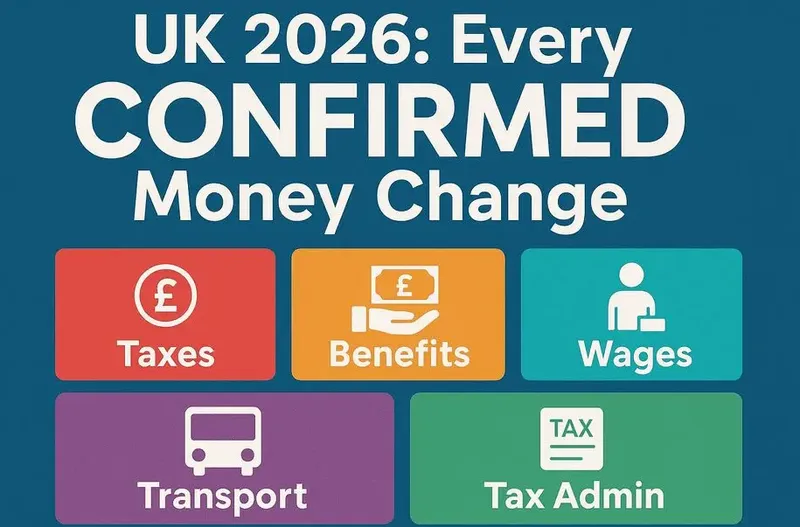
A plain-English guide to income tax, NICs, capital gains, inheritance tax and more for 2026/27
The 2026/27 UK tax year starts on 6 April 2026, and it brings several important changes that could affect your take-home pay, savings, investments, and business. This guide breaks down everything in simple terms so you can plan ahead and make the most of the allowances available to you.
Looking for last year instead? See our guide to the key changes for the 2025/2026 tax year.
Income Tax Rates and Allowances for 2026/27
Personal Allowance Still Frozen
The tax-free personal allowance stays at £12,570 for 2026/27. The thresholds for higher rate (40%) and additional rate (45%) tax in England, Wales, and Northern Ireland are also unchanged. Following Budget 2025, all of these amounts are frozen until at least April 2031.
Why does this matter? Because wages tend to rise with inflation, but these thresholds do not. That means more of your income gets pushed into higher tax brackets each year, even if your real spending power hasn’t changed. This effect is sometimes called “fiscal drag.” To see exactly how the frozen thresholds affect your pay in 2026/27, try our take-home pay calculator.
Scottish Income Tax 2026/27
If you’re a Scottish taxpayer, slightly different rules apply to your earned income (salary, self-employment profits, pensions, and rental income). While the Scottish tax rates stay the same for 2026/27, there are minor adjustments to the basic and intermediate rate band thresholds. Savings and dividend income continues to follow UK-wide rules.
Dividend Tax and Savings Allowances
Dividend Tax Rates Are Going Up
If you earn dividends from shares held outside an ISA, you’ll pay more tax from April 2026. The tax-free dividend allowance stays at £500, but the rates above that are increasing by 2 percentage points for basic and higher rate taxpayers.
Basic rate: 10.75% (up from 8.75%)
Higher rate: 35.75% (up from 33.75%)
Additional rate: 39.35% (no change)
You can work out what the new rates mean for your dividend income with our dividend tax calculator.
Personal Savings Allowance
The Personal Savings Allowance is unchanged. Basic rate taxpayers can still earn up to £1,000 of interest tax-free from bank accounts, building societies, and similar investments. Higher rate taxpayers get a £500 allowance. Additional rate taxpayers do not receive this allowance.
ISA Allowances: Act Now Before 2027 Changes
You can still save up to £20,000 across all your ISAs in 2026/27 (cash ISAs, stocks and shares ISAs, innovative finance ISAs, and Lifetime ISAs). No income tax or Capital Gains Tax applies to money held in ISAs.
Important change from April 2027: If you’re aged 64 or under, the maximum you’ll be able to add to a cash ISA drops to £12,000. The overall £20,000 limit stays the same, meaning the remaining £8,000 can go into a stocks and shares ISA. The 2026/27 tax year is your last chance to maximise your cash ISA contributions at the full £20,000 level. Consider seeking investment advice before making changes to your strategy.
Capital Gains Tax (CGT) for 2026/27
The annual CGT exemption remains at £3,000 per person. The main CGT rates are unchanged: 18% for basic rate taxpayers and 24% for higher/additional rate taxpayers.
Key change: If you’re claiming Business Asset Disposal Relief or Investors’ Relief, the CGT rate rises from 14% to 18% for disposals on or after 6 April 2026.
If you’re planning to sell shares or property this year, our capital gains tax calculator can estimate what you’d owe.
National Insurance Contributions (NICs)
Employee NICs
No changes for employees. You’ll continue to pay 8% on earnings between £12,570 and £50,270, and 2% on earnings above £50,270.
Employer NICs
Employer NIC stays at 15% on earnings above £5,000 per year. The same 15% rate applies to most employee benefits in kind (Class 1A NICs).
Self-Employed NICs
Class 4 NICs remain at 6% on profits between £12,570 and £50,270, and 2% above that. Voluntary Class 2 NICs (£3.65 per week) are available for those earning below the Small Profits Threshold of £7,105.
Overseas workers: If you’ve been paying voluntary Class 2 NICs to build up State Pension entitlement, costs are increasing from 2026/27 and eligibility rules are tightening.
Changes to Employee Tax Reliefs
Good News: Tax-Free Reimbursements Expanded
From 6 April 2026, employers can reimburse employees tax-free for flu vaccinations, eye tests, and home-working equipment that the employee has paid for personally. Previously, the employer generally had to pay for these items directly to avoid triggering tax or NIC charges.
Bad News: Home-Working Tax Relief Scrapped
From 6 April 2026, you can no longer claim the flat-rate home-working tax relief (typically £6 per week) directly from HMRC. If your employer reimburses you for home-working costs, that payment remains tax-free. But if your employer doesn’t offer reimbursement, you’ll lose this relief entirely.
Inheritance Tax (IHT) Changes
A major change takes effect from April 2026 for business owners and farmers. Agricultural Relief and Business Relief at the full 100% rate will be capped at £2.5 million of qualifying assets per person. Assets above this cap receive only 50% relief.
The IHT nil-rate band remains frozen at £325,000 until April 2031. It has been at this level since 2009, meaning more estates are being caught by IHT as property and asset values have risen over time. You can estimate your estate’s potential liability with our inheritance tax calculator.
Self-Assessment and Making Tax Digital
Since April 2024, high-earning employees with simple tax affairs (for example, salary income only and no tax reliefs to claim) no longer have to file a Self-Assessment tax return, regardless of income level. HMRC’s online tool can help you check whether you still need to file.
Making Tax Digital (MTD) for Income Tax begins in April 2026 for self-employed individuals and landlords with gross income over £50,000 (as reported on their 2024/25 tax return). If you’re in this group, you’ll need to keep digital records and submit quarterly updates to HMRC.
Quick Reference: Key 2026/27 Tax Changes
| Area | What’s Changing |
| Dividend Tax | Basic rate rises to 10.75%; higher rate rises to 35.75% |
| Scottish Income Tax | Small changes to basic and intermediate rate band thresholds |
| CGT (BADR/IR) | Rate increases from 14% to 18% |
| Employee Reimbursements | Flu jabs, eye tests, and home-working kit can be reimbursed tax-free |
| Home-Working Relief | Can no longer be claimed directly from HMRC |
| Inheritance Tax | 100% business and agricultural relief capped at £2.5m per person |
| Making Tax Digital | Applies to self-employed/landlords with income over £50,000 |
What’s Coming After April 2027?
April 2027: New Tax Rates on Savings and Property Income
From April 2027, savings income and rental profits will be taxed at rates 2% higher than the main income tax rates. That means 22% at the basic rate, 42% at the higher rate, and 47% at the additional rate.
April 2027: MTD Expands and New Late-Filing Penalties
Making Tax Digital will extend to self-employed individuals and landlords with income above £30,000. A new penalty system for late returns and late payments will also take effect.
April 2029: Salary Sacrifice Pension Cap
A new £2,000 annual cap will apply to salary sacrifice pension contributions that qualify for NIC relief.
Year-End Tax Housekeeping Checklist
Check Your PAYE Tax Code
Your tax code determines how much tax is deducted from your pay. You can check it through your Personal Tax Account, the HMRC app, or any paper notices you’ve received. If you use an accountant, send them a copy of any updated tax codes, as agents often don’t receive automatic notifications.
Claim the Marriage Allowance
If one partner in a marriage or civil partnership doesn’t use their full personal allowance, they can transfer 10% of it (£1,257) to their spouse or civil partner. This could save up to £252 per year and can be backdated by up to four years. The claim must be made by the lower earner.
Review Your Child Benefit Position
The High Income Child Benefit Charge (HICBC) thresholds changed in 2024/25. If you previously opted out of receiving Child Benefit because of the charge, it’s worth checking whether you’d now be better off opting back in. HMRC has launched digital services to make this easier, including an option to pay any HICBC through your PAYE tax code.
Take Action Now
The start of a new tax year is the ideal time to review your finances. Understanding these changes now gives you the best chance to take advantage of available allowances, avoid unexpected tax bills, and plan for the years ahead.
Sources
- Rates and thresholds for employers: 2026 to 2027 – GOV.UK (income tax, National Insurance and student loan thresholds)
- Income Tax rates and Personal Allowances – GOV.UK